
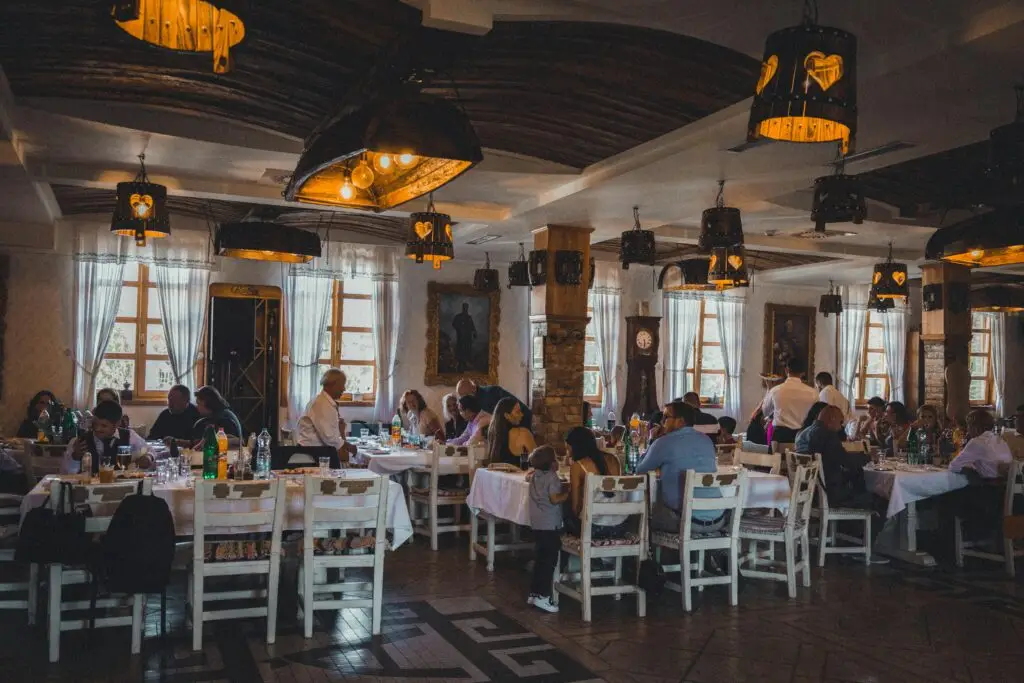
You know that moment during Friday dinner rush when three tables need attention, there’s a line of walk-ins waiting to be seated, and your phone starts ringing?
That’s not just stressful—it’s expensive.
Every time your staff chooses between serving seated customers and answering the phone, you’re losing money. Either the caller hangs up and books elsewhere, or your table service suffers and your Google reviews take a hit.
If you’re experiencing any of these 7 warning signs, your restaurant needs an AI receptionist before your competitors implement one and start capturing the reservations you’re missing.
Sign #1: Your Voicemail Has More Than 5 Messages at the End of Shift
What it means: You’re missing reservations daily.
The real cost: If even half of those voicemails are reservation inquiries, and each represents a party of 3 spending $45/person, you’re losing $337.50 per day. That’s $10,125 per month or $121,500 per year.
Why it happens: Your staff is too busy during service to answer phones, and customers calling after hours (before you open, after you close) get voicemail instead of immediate booking confirmation.
What an AI receptionist does: Answers every call in under 2 rings, 24/7. Takes reservations, answers questions, and sends confirmations instantly. Your voicemail becomes empty except for truly complex situations that need human judgment.
Real example: “We used to have 15-20 voicemails every Saturday morning from Friday night missed calls. Now we have zero. The AI handles everything overnight, and we wake up to a fully booked Saturday with all confirmations sent.” – Marco, Chicago Pizza Bistro
Sign #2: Your Host/Hostess Spends More Time on the Phone Than Greeting Guests
What it means: You’re paying someone $15-18/hour to be a phone operator instead of a hospitality professional.
The real cost: If your host spends 60% of their shift on the phone:
- Lost hospitality value: $600-720/week
- Frustrated walk-in customers who wait to be acknowledged: 20-30/week
- Poor first impressions leading to negative reviews: 2-3/month
Why it happens: Reservation calls, “Are you open?” calls, “Do you take groups?” calls, dietary restriction questions, and directions inquiries never stop during business hours.
What an AI receptionist does: Handles all incoming calls instantly, freeing your host to actually host—greeting guests warmly, managing the floor, handling special requests, and creating memorable first impressions.
Real example: “Our host Sarah told me she felt like a call center operator, not a hospitality professional. After implementing AI call handling, she said she finally feels like she can do her actual job. Guest satisfaction scores increased by 23% in 60 days.” – Jennifer, Urban Kitchen Seattle
Sign #3: You’re Regularly Double-Booked or Have Unexpected Gaps
What it means: Your reservation management is fragmented across phone calls, OpenTable, walk-ins, and verbal confirmations.
The real cost:
- Double bookings: Angry customers, comp meals, lost future business
- Unexpected gaps: Empty tables during prime hours because someone said “maybe” on the phone and you held the table
- Poor table utilization: Lost revenue of $200-400 per service
Why it happens: When different staff members take phone reservations and someone forgets to log them, or when a customer cancels via phone but it doesn’t update your system, chaos follows.
What an AI receptionist does: Every reservation goes directly into your central system in real-time. Cancellations update instantly. No more “I thought you put them in the book” confusion. One source of truth.
Real example: “We had two separate parties of 8 show up for the same 7 PM time slot last Thanksgiving. Nightmare. Our server had taken one over the phone and forgot to log it. That can’t happen with AI—everything is recorded and logged automatically.” – David, Coastal Grill Miami
Sign #4: Customers Complain They “Can Never Get Through”
What it means: Your phone is busy, rings endlessly, or goes straight to voicemail during peak times.
The real cost: Every frustrated caller who can’t reach you is a customer who will:
- Try once more (50% of people)
- Call a competitor (75% of those who retry and fail again)
- Leave a negative review (30%)
- Tell friends about the poor experience (85%)
One bad phone experience can cost you 5-10 potential customers through negative word-of-mouth.
Why it happens: You have one phone line and during rush hours, your staff is overwhelmed. Customers hear a busy signal or endless ringing and assume you don’t care about their business.
What an AI receptionist does: Handles unlimited simultaneous calls. If 10 people call at exactly 7 PM on Friday night, all 10 get answered immediately. No busy signals, no hold times, no frustration.
Real example: “We saw our ‘impossible to get a reservation’ Google reviews drop from 12 per month to zero after implementing AI phone answering. People still leave reviews, but now they’re about how easy it was to book.” – Amanda, Steakhouse Austin
Sign #5: You’re Paying Staff to Come in Early Just to Answer Phones
What it means: Your phone starts ringing before your restaurant opens, and you’re paying someone to sit there and take reservations.
The real cost:
- Staff arriving 2 hours early × $15/hour × 7 days/week = $210/week
- Annual cost: $10,920
- For a job that could be automated
Why it happens: Customers call throughout the day to make reservations for tonight, tomorrow, or next week. They call at 9 AM before you open at 11 AM. They call at 10 PM after you close at 9 PM. Someone has to answer.
What an AI receptionist does: Takes calls 24/7/365 without ever clocking in. 2 AM reservation for someone planning their anniversary next month? Handled. 6 AM call from an early riser? Answered immediately.
Real example: “I was paying my assistant manager to come in at 9 AM every day just to answer phones for 2 hours before we opened at 11 AM. That’s $14,000 per year. AI costs me $2,400/year and works all night too. The math isn’t even close.” – Robert, Family Diner Portland
Sign #6: Your Staff Gives Inconsistent Information to Customers
What it means: When customer service depends on whoever answers the phone, information quality varies wildly.
The real cost:
- “Wait, I was told you had gluten-free pasta” → Angry customer, comped meal
- “The person I spoke to said kids eat free on Tuesdays” → But it’s Thursdays
- “I was told you could accommodate our party of 12” → But you max out at 10
These inconsistencies damage your reputation and cost you money in comp meals and lost business.
Why it happens: Different staff members have different levels of menu knowledge, some give outdated information, and during busy times, people make mistakes or forget details.
What an AI receptionist does: Gives the exact same accurate information every single time. You program it once with your menu, policies, hours, and special accommodations. Every caller gets perfect, consistent information.
Real example: “We used to have at least one ‘but I was told…’ situation every week that resulted in a comp or discount. Since AI started answering our phones, those incidents dropped to basically zero. Saved us probably $400/month in comps alone.” – Lisa, Fusion Bistro San Francisco
Sign #7: You’re Turning Away Large Parties Because You Don’t Have Time to Coordinate
What it means: Large group reservations (8-20 people) require multiple back-and-forth communications that your busy staff doesn’t have time to manage properly.
The real cost: Large parties are your highest-revenue reservations. A party of 12 spending $50/person = $600 in one table. If you’re turning away even 2 large parties per month because coordination is too complicated:
- Lost revenue: $1,200-1,800/month
- Annual lost revenue: $14,400-21,600
Why it happens: Large groups need:
- Date/time coordination
- Menu preferences discussion
- Deposit arrangements
- Seating configuration planning
- Dietary restriction questions
This requires multiple phone calls, emails, and follow-ups that busy restaurant staff just can’t manage efficiently.
What an AI receptionist does: Handles the entire large party booking process:
- Collects all information upfront
- Answers common questions about menus and space
- Sends booking confirmations and reminders
- Can collect deposits if integrated with payment systems
- Escalates only when human judgment is truly needed
Real example: “We used to avoid large parties because they were so much work to coordinate. Now the AI handles 90% of it and only loops us in when there’s something custom like a private room setup. We’re now booking 8-10 large parties per month instead of 2-3. That’s an extra $48,000 per year in revenue.” – Tom, Italian Villa Restaurant NYC
How Many Signs Do You Have?
If you identified with even 2-3 of these signs, you’re losing significant revenue to preventable reservation misses and inefficiencies.
Here’s the thing: every day you delay, your competitors are implementing these systems and capturing the customers you’re missing.
The Implementation Reality
What restaurant owners worry about: “It sounds complicated and expensive.”
The actual reality:
- Setup time: 5 minutes
- Monthly cost: $89-199 (less than one night’s lost reservations)
- Technical complexity: If you can use your smartphone, you can set this up
- ROI timeline: Most restaurants see positive ROI within 30 days
What you need to get started:
- Your restaurant phone number
- Your business hours
- Basic menu information
- Table capacity
- Integration with your existing reservation system (if you use one)
That’s it. The AI handles everything else.
What Happens If You Wait
Let’s be brutally honest about what happens if you ignore these signs:
Month 1: You lose 40-60 reservations to missed calls and poor phone coverage. Lost revenue: $4,000-8,000
Month 3: Your competitor implements AI and starts capturing the customers who couldn’t reach you. They leave reviews about “amazing customer service” and “easy to book.” You get reviews about being “impossible to reach.”
Month 6: Your revenue is flat or declining while your competitor is up 15-20%. You still don’t know why.
Month 12: You’ve lost $50,000-100,000 in missed reservations and your competitor has established themselves as the easier, more professional choice in your market.
The Competitive Advantage Window Is Closing
Right now, AI receptionists for restaurants are still relatively new. If you implement one this month, you have a competitive advantage in your market.
But this window is closing quickly. In 6-12 months, AI phone answering will be standard across the industry, just like online ordering became standard during COVID.
The restaurants that implement early will capture the customers and build the reviews. The restaurants that wait will be scrambling to catch up while their competitors are already established as the easier, more professional choice.
Take the Simple Test
Try this experiment: Call your own restaurant right now at a busy time.
- How many rings before someone answers?
- How long are you on hold?
- Does the person sound stressed or rushed?
- Do you get accurate information about your menu and policies?
Now imagine that’s a potential customer calling. Would they have a good experience?
If the answer is no, you know what to do.
Ready to stop losing reservations? Try ZentryChat free for 14 days and see exactly how many calls you’re missing. No credit card required.